Go to the emergency room if you are passing a lot of blood with clots, or if you cannot urinate at all. Clots can block the bladder, and a blocked bladder needs to be drained right away.
What is bladder cancer?
The bladder is a hollow, muscular organ in the lower belly that stores urine. Bladder cancer starts when cells in the bladder’s inner lining grow out of control. It is the sixth most common type of cancer in the United States, and it is more common in men than in women.
Most bladder cancers are found while they are still in or near the inner lining (non-muscle-invasive cancer). Some grow deeper, into the muscle wall of the bladder (muscle-invasive cancer). That is more serious and is treated differently.
Who is at risk?
Anybody can get bladder cancer, but it is most common in older adults, usually over age 60 to 65. Some things raise the chance of getting it:
- Smoking. This is the most important risk factor. Harmful chemicals from tobacco are filtered into the urine and sit in the bladder. Quitting lowers your risk over time.
- Radiation therapy to the pelvic area in the past
- Arsenic in drinking water
- Chemicals at work. Long-term exposure to certain chemicals puts hairdressers, painters, printers and dry cleaners at higher risk.
Signs and symptoms
The most common symptom is painless blood in the urine (hematuria). It may look pink, red or dark brown. People often confuse it with dark yellow or amber urine, which usually just means the urine is concentrated because you need more fluids. That is not the same thing. If you are not sure, have your urine checked. Your doctor can do a quick dipstick test in the office and, if it is positive, send a sample for a microscopic urinalysis to confirm blood.
Many patients have blood in the urine that comes and goes. If it goes away, that does not mean you are cancer-free. Less often, bladder cancer causes needing to urinate often or urgently, or burning when you urinate. These are much more often caused by an infection, but they should be checked if they don’t clear up.
Blood in the urine also has other causes, including infection, kidney stones and an enlarged prostate. The only way to know is to be tested. More about blood in the urine.
How is bladder cancer found?
If a urine test shows blood, or you have seen blood even a single time, you should be tested for bladder cancer. Dr. Su uses two tests that together look at the whole urinary tract:
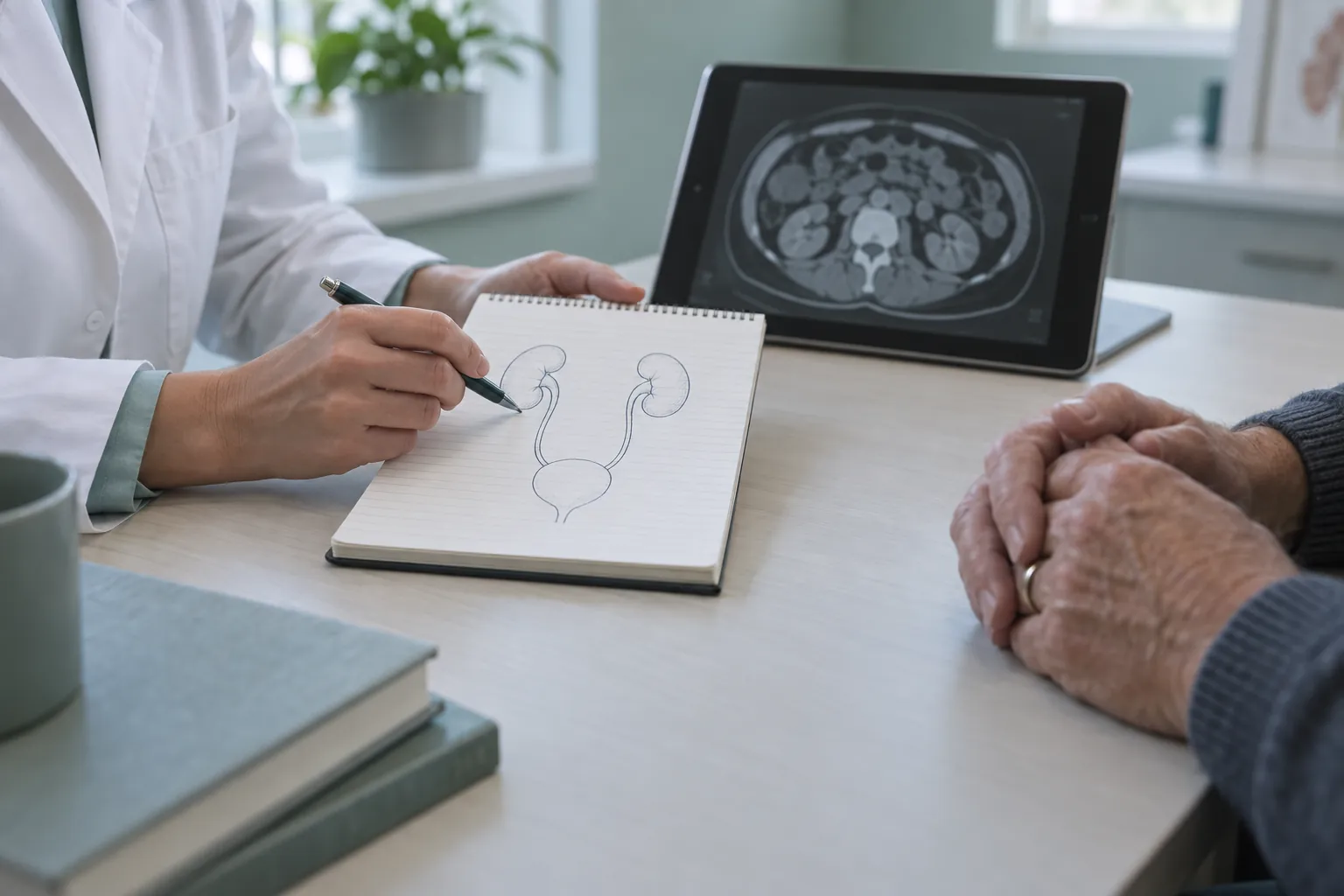
Imaging, usually a CT scan
The scan looks at your kidneys, which can also be a source of blood in the urine.
Cystoscopy
A small camera on a long, thin tube is passed through the opening of the urethra into the bladder, so Dr. Su can look at the bladder lining for tumors. The test takes about 1 to 2 minutes and is well tolerated.
If a tumor is found: TURBT
The first step for a bladder tumor is usually a transurethral resection of bladder tumor, or TURBT. It confirms the diagnosis, and for many early tumors it is also the first treatment.
- Where
- In the operating room, under anesthesia
- Incisions
- None. The scope goes in through the urethra
- Going home
- Often the same day
- What it tells you
- The tumor’s grade and how deep it has grown
Dr. Su passes a scope through the urethra into the bladder and removes the tumor with a small wire loop. A pathologist then examines the tissue to find the grade (how aggressive the cells look) and the stage (whether the tumor has grown into the muscle wall). For many early tumors, TURBT removes all of the cancer that can be seen. Sometimes a dose of medicine is placed into the bladder right after surgery to lower the chance of the tumor coming back. Some people need a catheter for a short time afterward.
Treatment after TURBT
What comes next depends on the pathology results.
Non-muscle-invasive cancer
The tumor has not reached the muscle wall. Treatment is often TURBT alone or TURBT followed by medicine placed directly into the bladder through a catheter (intravesical therapy). This may be chemotherapy or BCG, a treatment that stirs up the immune system inside the bladder. Because these tumors often come back, regular cystoscopy checkups are an important part of care.
Muscle-invasive cancer
The tumor has grown into the muscle wall. Treatment usually involves a team of specialists and may include chemotherapy, surgery to remove the bladder, or chemotherapy combined with radiation to keep the bladder. Dr. Su works closely with medical and radiation oncologists to plan care.
Want to read more? The National Comprehensive Cancer Network (NCCN) publishes a free, detailed guide for patients who want to learn more about bladder cancer. NCCN Guidelines for Patients.
Questions patients ask
I saw blood in my urine once and it went away. Do I still need to be checked?
Yes. Blood from a bladder tumor often comes and goes, so a single episode is enough reason to be tested. The work-up is usually a CT scan and a cystoscopy.
Is dark urine the same as blood in the urine?
No. Dark yellow or amber urine usually means you need more fluids. Blood makes urine look pink, red or dark brown. If you are not sure, a quick urine test in the office can tell.
Does cystoscopy hurt?
Most people feel some pressure or brief discomfort. The test takes about 1 to 2 minutes and is well tolerated by patients.
Will my bladder cancer come back?
Early bladder cancers often do come back, which is why follow-up cystoscopy on a regular schedule is so important. How often you need it depends on your tumor. If you smoke, quitting is one of the most helpful things you can do.