What a high PSA can mean
PSA (prostate-specific antigen) is a protein made by the prostate, measured with a simple blood test. A high or rising PSA can be an early sign of prostate cancer. It can also be raised by an enlarged prostate, inflammation or infection. So the next step is a careful evaluation, not an automatic biopsy.
Most prostate cancer causes no symptoms, and about 1 in 8 men will be diagnosed during his lifetime. The risk is higher after age 50, for men whose father or brother had prostate cancer, and for African American men. More about prostate cancer.
Before a biopsy: biomarker tests and MRI
Two kinds of tests help decide whether you need a biopsy at all, and where to look if you do.
- Biomarker tests. Blood or urine tests, including the 4Kscore, SelectMDx, ExoDx and IsoPSA, look for markers linked to prostate cancer. They help decide whether a biopsy is needed and help avoid unnecessary biopsies.
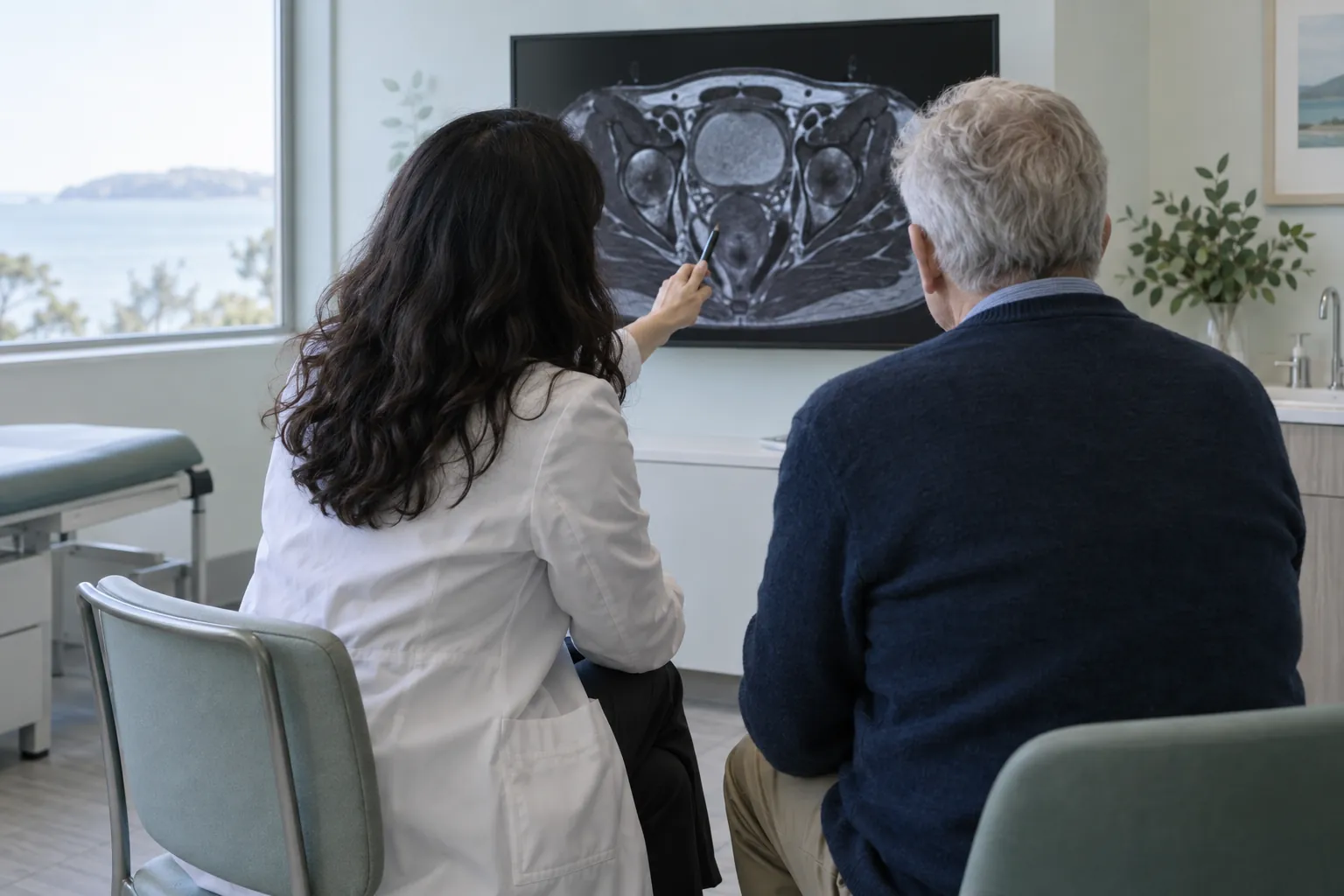
- Prostate MRI. An MRI takes detailed pictures of the inside of the prostate. A radiologist rates any area of concern on a 1-to-5 scale called PI-RADS. Higher numbers mean a higher chance of a cancer that matters. MRI is especially useful when the PSA and exam don’t give a clear answer, and it can also show how far a cancer extends and whether it has spread beyond the gland.
How fusion biopsy works
A standard prostate biopsy uses ultrasound to take samples from a set pattern of spots across the gland. Ultrasound shows the outline of the prostate well, but it often cannot show the cancer itself. A fusion biopsy adds your MRI. Software lays the MRI over the live ultrasound picture, so Dr. Su can see the suspicious areas from the MRI during the procedure and aim the needle right at them.
Guiding the biopsy with MRI helps identify areas of concern more accurately and improves the accuracy of the biopsy. Studies have found that MRI targeting helps find more of the cancers that need treatment, and fewer of the small, slow-growing ones that may never cause harm. Targeted samples are usually taken along with a standard set of samples from the rest of the prostate.
MRI-ultrasound fusion biopsy is one of Dr. Su’s areas of expertise. She completed a fellowship in robotic surgery and urologic oncology at the John Wayne Cancer Institute in Santa Monica.
What to expect, step by step
Consultation
Dr. Su reviews your PSA history, exam and any earlier results with you, and explains whether a biopsy makes sense.
Biomarker test or MRI
If needed, to decide whether a biopsy is worthwhile and where to look.
Getting ready
You may be asked to stop aspirin, anti-inflammatory pain relievers and herbal supplements for a week beforehand. If you take a prescription blood thinner, ask the doctor who prescribes it before you stop. You will usually use an enema the night before and the morning of the biopsy, and an antibiotic is usually given to lower the risk of infection. See the pre-procedure instructions.
The fusion biopsy
You get medicine to numb the area or help you relax. Dr. Su combines your MRI with live ultrasound and takes samples from the precise areas of concern, usually along with samples from the rest of the gland.
Results and a plan
A pathologist examines the samples under a microscope. Dr. Su then goes over the results with you, explains what they mean and talks through what comes next.
After the biopsy
A prostate biopsy is an outpatient procedure, so you go home the same day. For the next few days to weeks it is common to have:
- A small amount of blood in the urine, and sometimes in the stool, for a few days
- Blood in the semen, which can last several weeks. It is harmless and fades on its own
- Mild soreness in the area
Go to the emergency room if you get a fever or chills after a biopsy, if you cannot urinate, or if you are passing a lot of blood or clots. A fever after a prostate biopsy can be a sign of a serious infection that needs treatment right away.
If prostate cancer is found
Treatment depends on the stage and aggressiveness of the cancer. Options include active surveillance (close monitoring), focal therapy such as HIFU or TULSA, radiation, hormone therapy and robotic prostatectomy. Dr. Su works with medical and radiation oncologists so your plan fits your cancer and your priorities. Read about prostate cancer treatment options and robotic prostatectomy.
Questions patients ask
Does a high PSA mean I have prostate cancer?
Not necessarily. PSA can be raised by other prostate conditions. It is a reason for a careful evaluation, which may include biomarker tests and an MRI before any decision about a biopsy.
Can a blood or urine test help me avoid a biopsy?
Sometimes. Biomarker tests such as the 4Kscore, SelectMDx, ExoDx and IsoPSA help decide whether a biopsy is needed and help minimize unnecessary biopsies. Dr. Su looks at the result together with your PSA history, exam and MRI.
Is the biopsy done through the rectum?
Prostate biopsies are done one of two ways: through the wall of the rectum (transrectal) or through the skin between the scrotum and the anus (transperineal). Both can be guided by MRI fusion. Dr. Su will explain the approach she recommends for you and why.
Does a prostate biopsy hurt?
Most people feel pressure and brief discomfort rather than sharp pain, because medicine is used to numb the area or help you relax. Mild soreness for a day or two afterward is common.
What if my biopsy is negative but my PSA keeps rising?
A negative biopsy is reassuring, but it is not always the final word. Follow-up PSA tests are usually recommended, and depending on the pattern, a repeat MRI, a biomarker test or another biopsy may be advised.